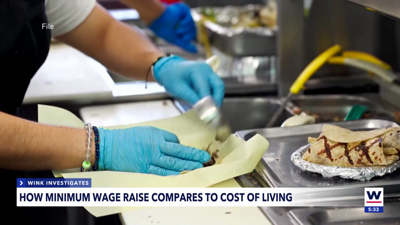


Florida's minimum wage increased by one dollar, reaching $14 an hour. This change is part of a voter-approved amendment from 2020, which aimed to gradually raise the minimum wage from $8.56 an hour.
Melanie Schmees, an Economic researcher and Manager of Sponsored Programs at the Regional Economic Research Institute, said the effects of the wage increase won't be immediate.
She explained that while workers might experience a slight boost in spending power, businesses may face decisions on whether to raise prices or absorb the cost.
Schmees emphasized the ongoing conversation about whether the current wage is sufficient, especially in Southwest Florida, where the cost of living is high.
She said, "This has been a conversation for a long time here, you know, are we able to retain workers in these key industries, or are businesses now going to start looking at models like automation, you know, self-checkout lines or things along those lines."
The minimum wage increase comes as many Floridian households struggle financially. According to the United Way of Florida, the hourly income needed to live comfortably in the state is almost three dollars below the new minimum wage.
Research from United Way of Florida found:
- The hourly income one needs to comfortably live in the Sunshine State is $16.90 (Single Adult, Age 18–64)
- Of Florida's 8,944,469 households in 2023, 13% earned below the Federal Poverty Level (FPL).
- Nearly 4.2 million people in Florida did not earn enough to cover basic costs in 2023.
- Of the 20 most common occupations in Florida, 13 paid less than $20 per hour in 2023.
Schmees said, "We'll see the effects down the line. If you are a worker who this minimum wage is affecting, you'll, you know, have a little bit more spending power if you are a consumer. Now we'll have to see what businesses do with the effect of this minimum wage increase taking place."
Florida's minimum wage is higher than that of most other states and the federal government. However, this increase could result in some families losing access to government benefits, a situation known as the "benefits cliff."
Employers should update payroll systems, and employees could see an additional $2,080 in annual earnings for a full-time worker.
Next September, the minimum wage will increase to $15 an hour, with future adjustments tied to inflation.