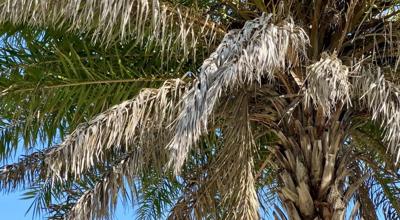


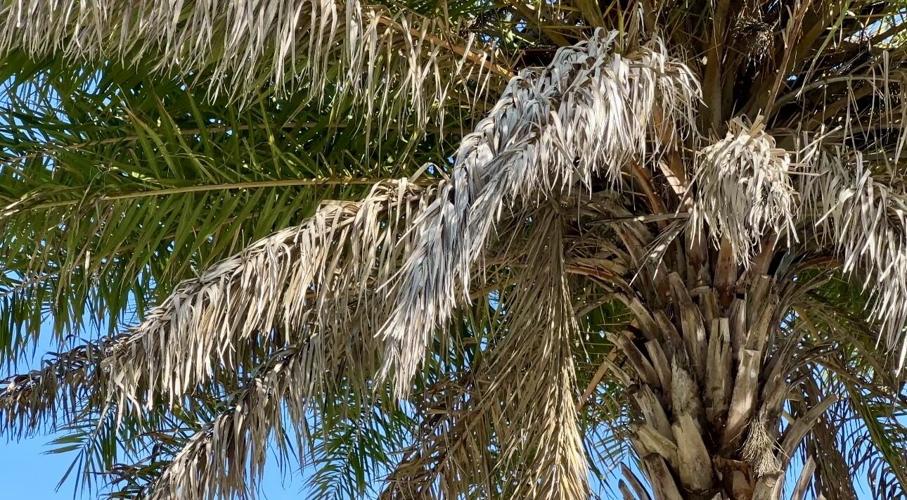
The iconic palm trees of Florida are facing a threat, and it's coming from a tiny insect carrying a big danger. Known as lethal bronzing disease, this killer is causing concern among locals and experts alike.
"It's just so iconic of what Florida and the, you know, southwestern part of Florida is all about," said Ron Hayes, a Sarasota local.
Palm trees are a staple of Florida's landscape, seen everywhere from the Gulf Coast to Orlando.
"Obviously, palm trees. I mean, no matter where you're at, whether you're here in this beautiful part of Florida, on the Gulf Coast, or, you know, Orlando, wherever you see them, everywhere," said Hayes.
The threat comes from an insect that spreads lethal bronzing disease, which is as devastating as it sounds. Debbie Hughes, a horticulturist at Edison and Ford Winter Estates, explained the process.
"An insect comes in and sucks the juices out of the plant and brings this disease," said Hughes.
She described how the disease affects the trees, turning the leaves yellow and giving them a bronzed appearance, much like a blowtorch had been applied to them.
"All the leaves start turning yellow, and it looks like a bronzing after a while, like they look like somebody just took a blow torch to them," said Hughes.
Once a palm is infected, the disease progresses rapidly, leaving little hope for recovery.
"One infected palm or one infected shrub could take out everything," said Amy Mullen, manager at Palm City Nursery & Landscaping.
Mullen encounters this problem frequently and empathizes with those affected.
"People do come in and they'll show me pictures, and I just feel for them," said Mullen.
However, there is hope if the disease is caught early. A deep root injection can treat the palm if it isn't too far gone.
"There is a deep root injection that could be given. If the palm isn't that far gone, it can be treated," said Mullen.
Experts advise prioritizing the care of palm trees to prevent infection. While an antibiotic can save a tree if the disease is caught early, it is often too late once symptoms appear. The best course of action is to remove infected palms to prevent the disease from spreading further.